Featured Artist · Leading Contemporary Artist
One of the leading artists from his generation in South Asia today, Rashid Rana’s practice spans digital works, paintings, stainless steel sculptures, video installations, photo-sculptures and photo mosaics.
Editorial Note
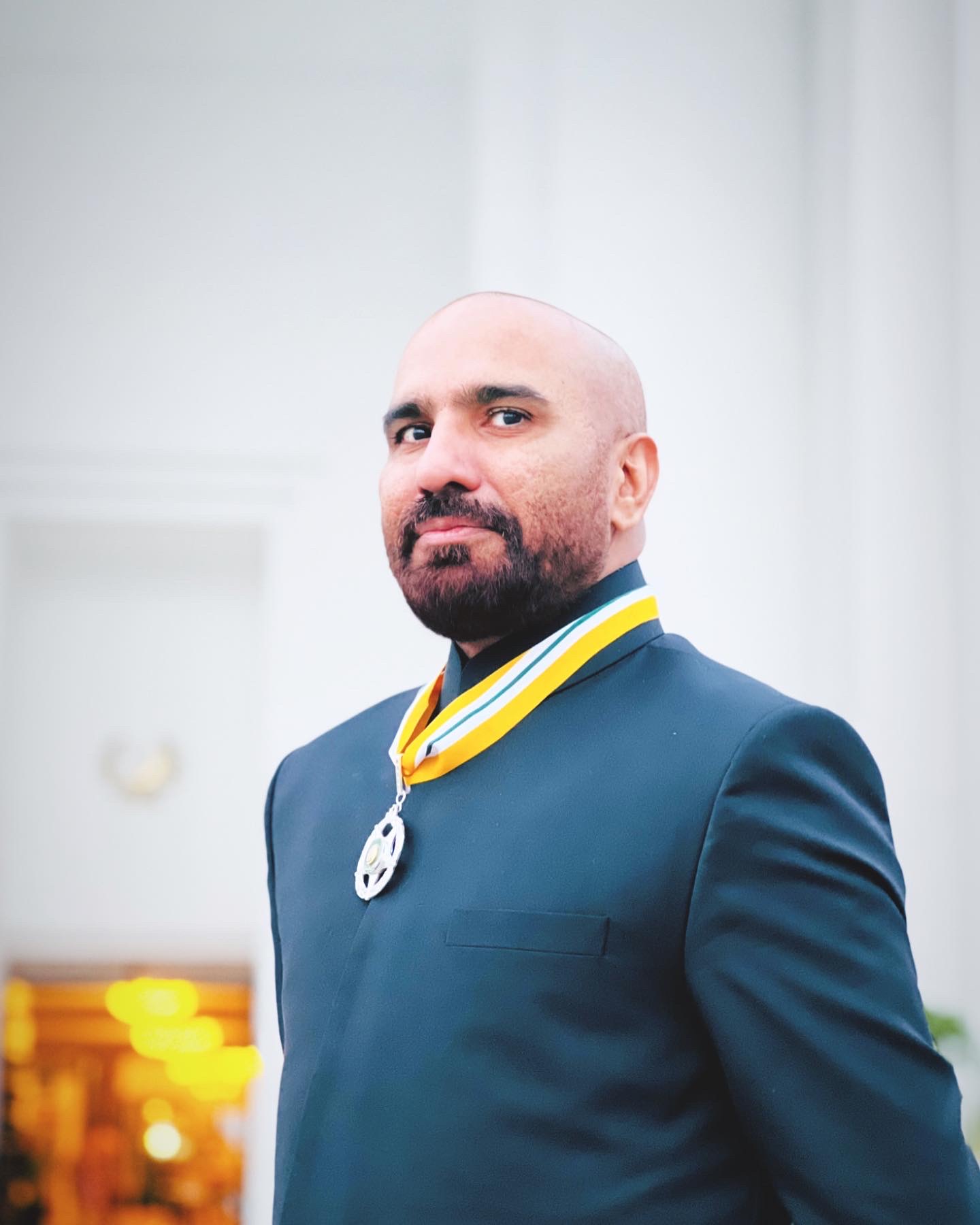
At Cosmopolitan Art Magazine Pakistan, we are deeply humbled and honoured to feature Mr. Rashid Rana, one of the most influential contemporary artists to emerge from Pakistan.
His contributions to visual art, education, curatorial practice and international cultural dialogue have transformed the landscape of contemporary art across the region and beyond.
About the Artist
One of the leading artists from his generation in South Asia today, Rashid Rana is widely recognised for a multidisciplinary practice spanning photography, painting, sculpture, video and digital media.
Notable for his innovative pictorial strategies, his oeuvre encompasses paintings, stainless steel sculptures, video installations, photo-sculptures and photo mosaics — each medium acting as a site of inquiry into dualities, paradoxes and parallel realities.
Rana’s works have been exhibited at prestigious venues globally and are part of major collections including the British Museum, London, and the Metropolitan Museum of Art, New York.
Featured Video
Directed & Shot by: Ali Aabid (@aliaabid1)
Production: Shami Alam
Edit: Muhammad Abdullah
Gimbal Operator: Abdullah Farooqi
A visual glimpse into Rashid Rana's world of image-making, perception, duality, contradiction and contemporary visual thought.
Artist Statement
Unburdening from self-imposed pressure of prescriptive and dogmatic ideas of affiliating one’s identity to political and cultural boundaries has been one of the core ideas in Rashid Rana’s practice.
His initial interest in the duality of space, beginning with the Untitled Series and Grid Paintings from the early 1990s, later expanded into a wider interest in duality, paradoxes, contradictions, polarities and parallel realities.
For Rana, these dualities become a way of dealing with the burden of representing reality. Doubles, mirrors and contradictions draw attention to the absurdity of presumed absolutes and open space for more complex ways of seeing.
He observes that every image, idea and truth — whether ancient or modern — encompasses its opposite within itself. This state of duality translates into his work formally, while also carrying geographical, historical and political connotations.
Today, Rana considers the binaries of East and West to be overplayed. Instead, he sees the binaries of “actual” and “remote” as more plausible. The actual is close at hand and experienced directly through the body, while the remote is knowledge gathered indirectly from diverse sources across time and space.
“My art-making, exhibition-making and curriculum-making overlap and converge. To me, these different practices are all forms of production.”
Work Highlight
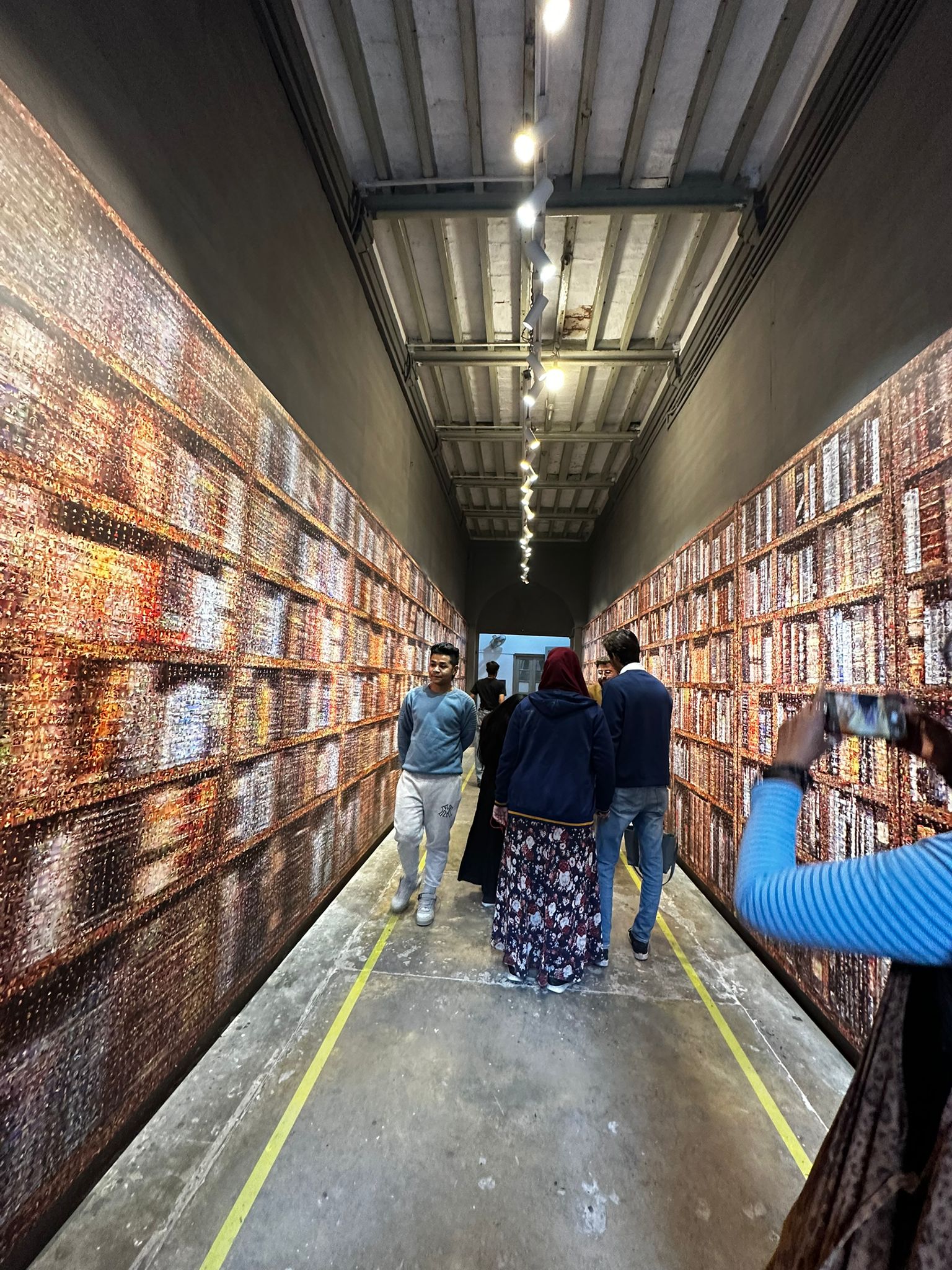
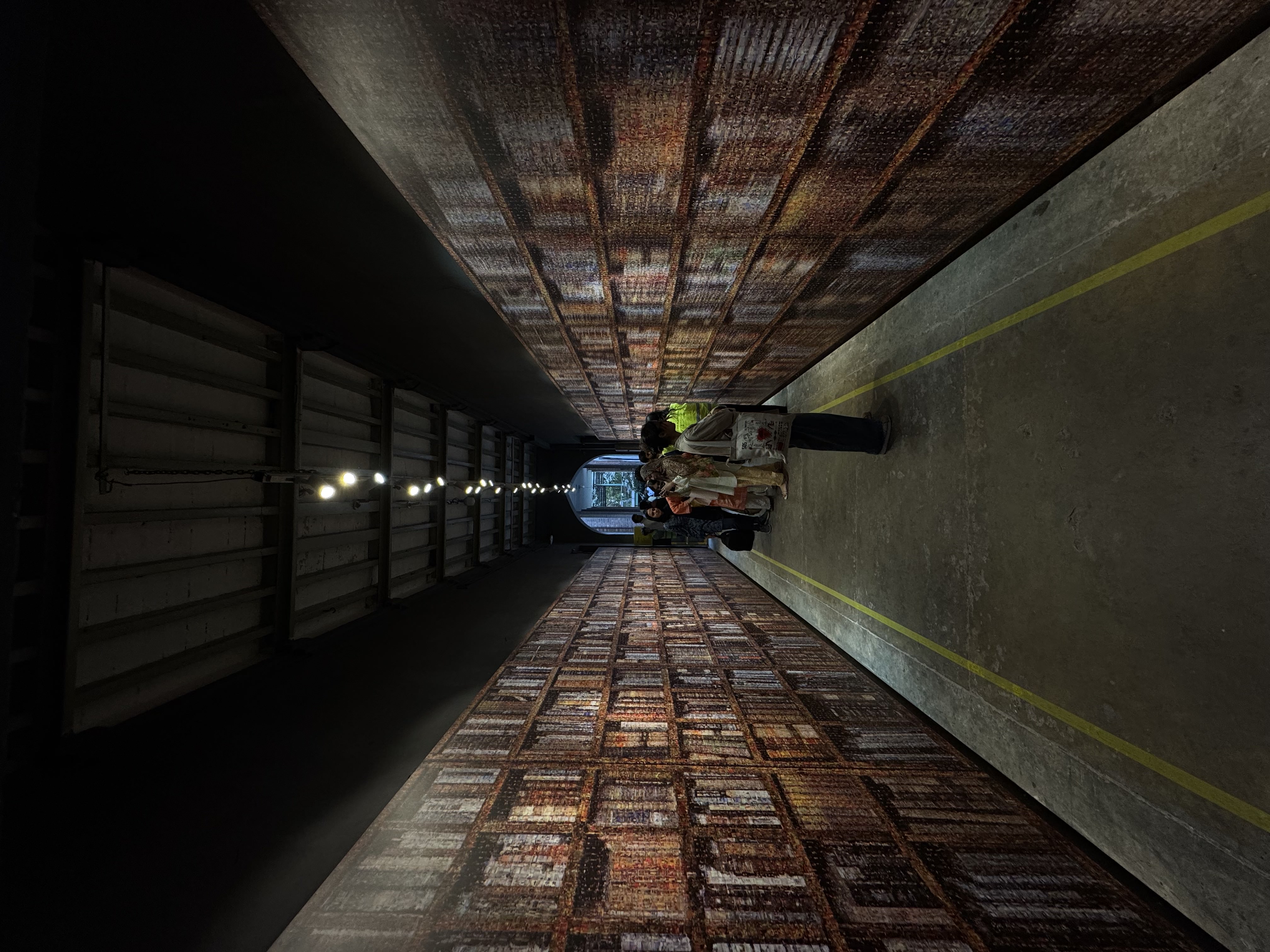
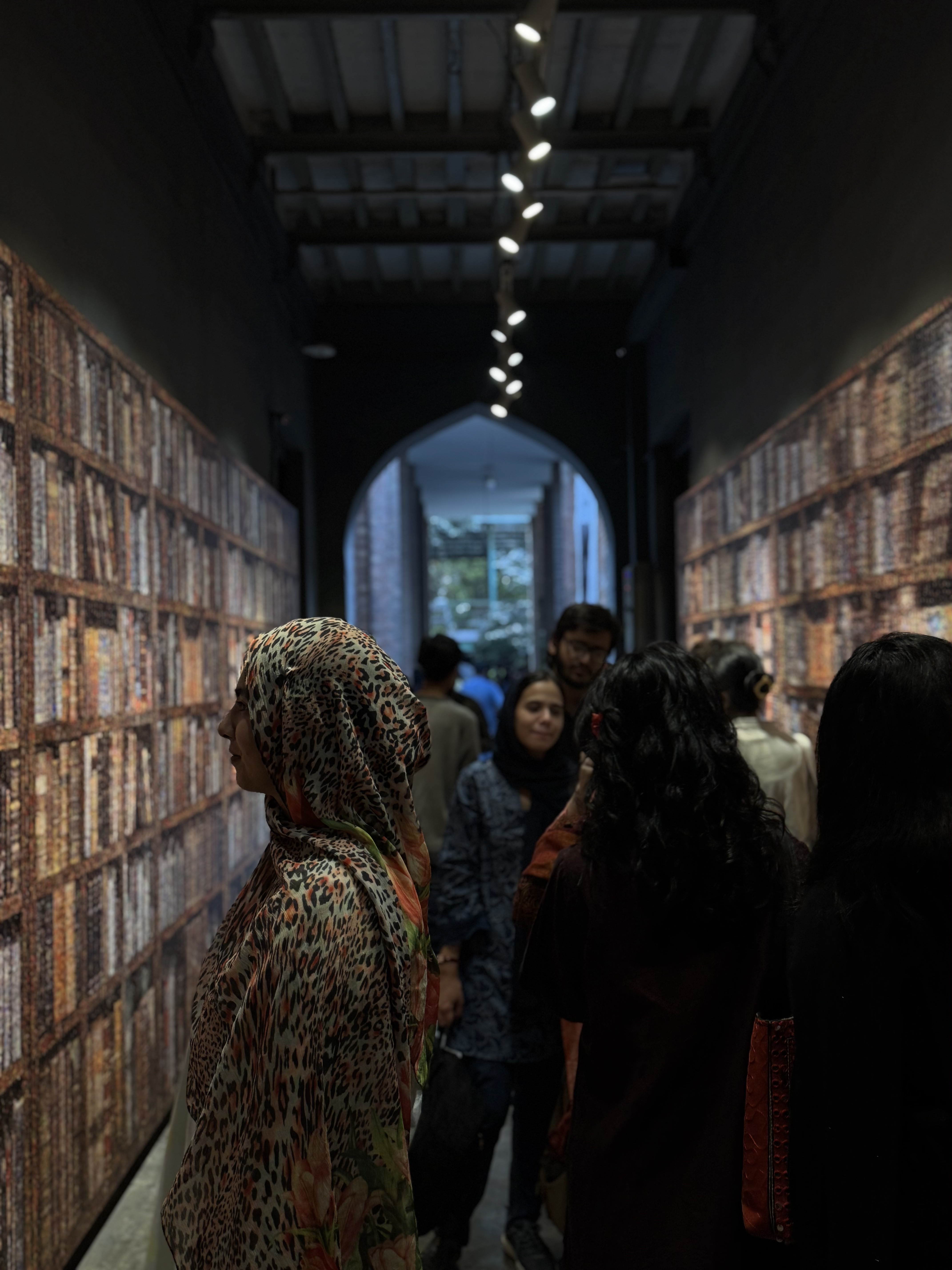
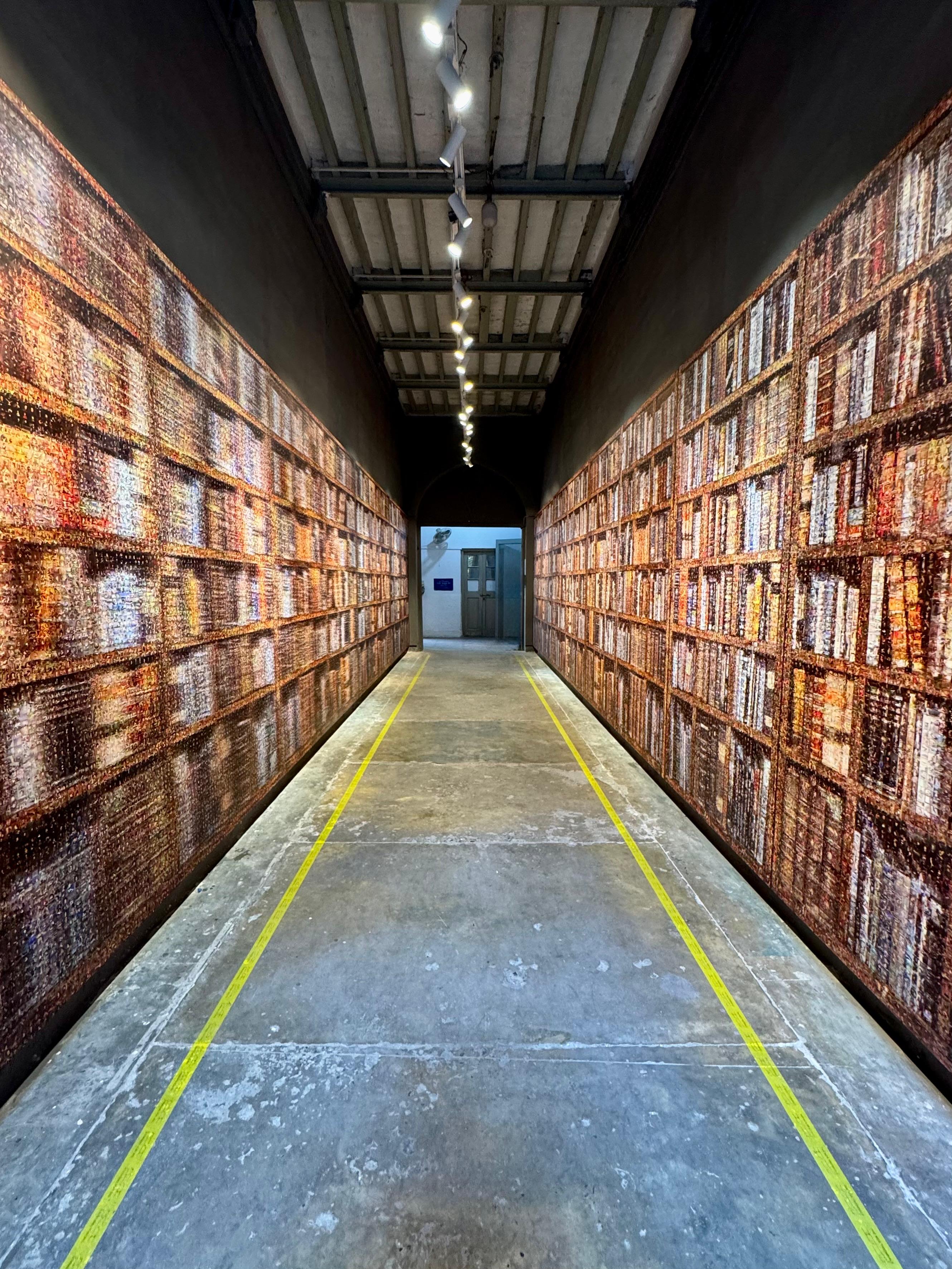
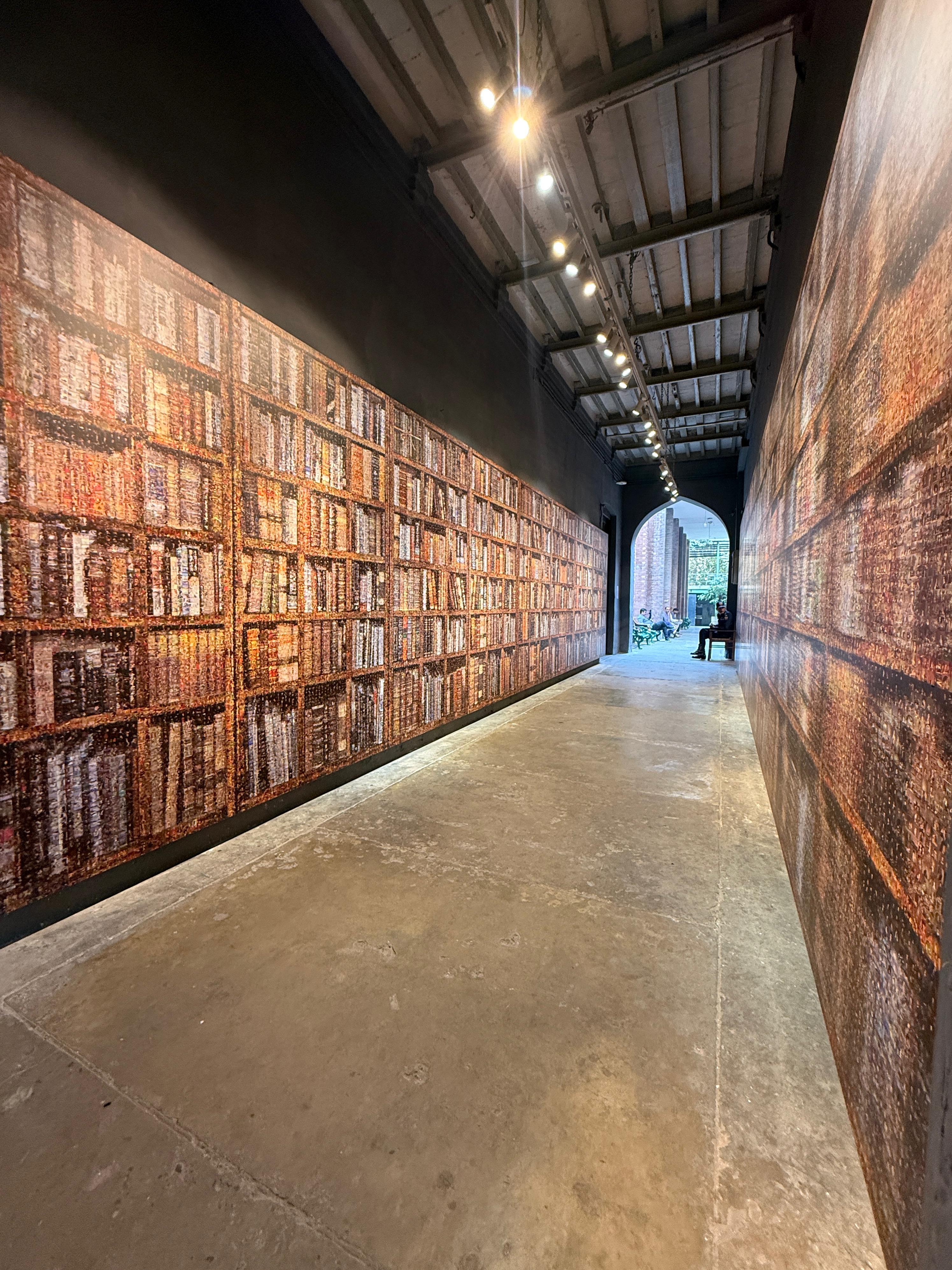
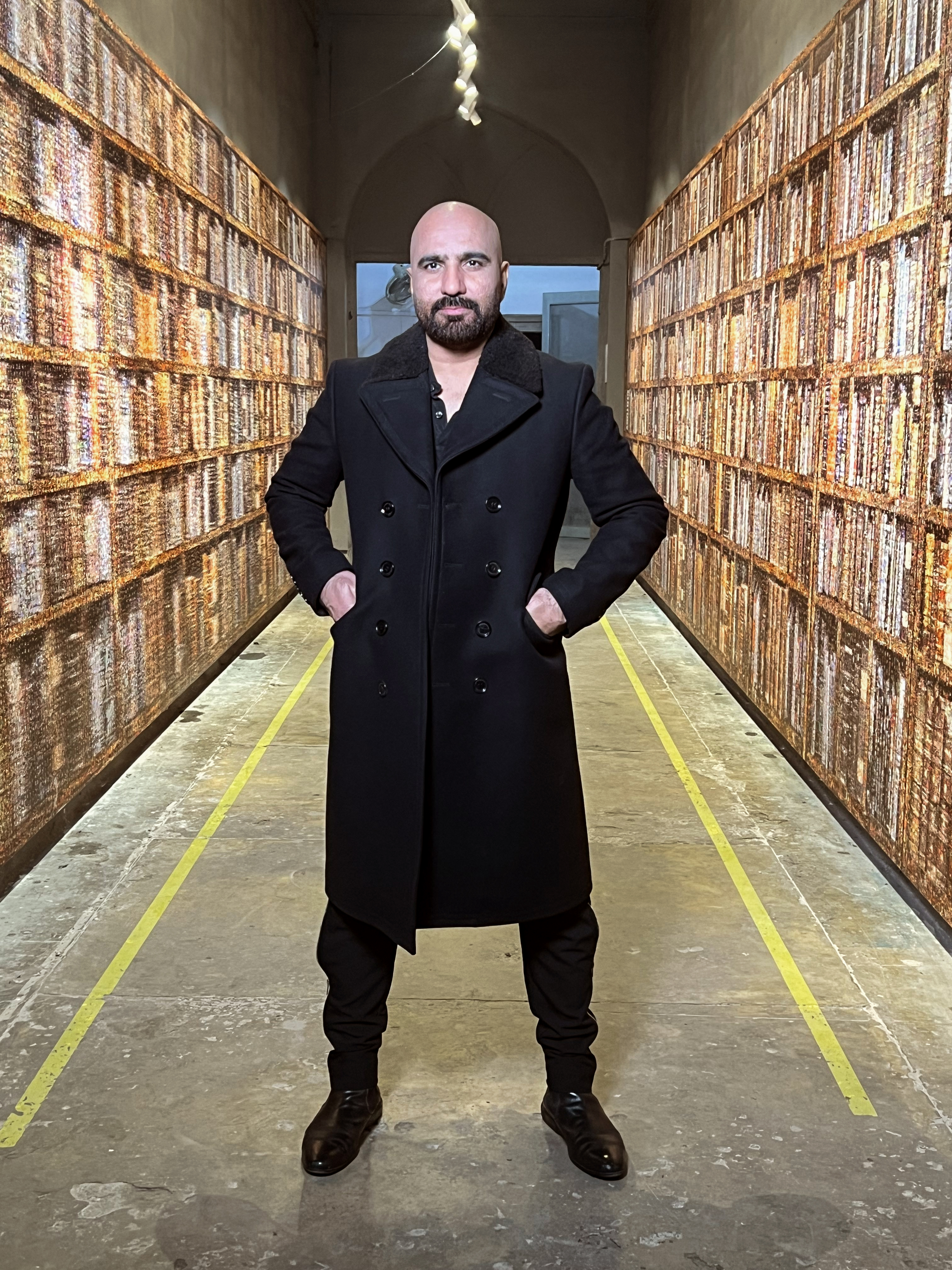
In Everything and Nothing, thousands of European paintings from the 16th to the 19th century formulate a large image of two identical bookshelves — which are not so identical, as one appears sharp and the other blurred.
Ironically, the blurred view of the bookshelf is made of sharp images of European paintings, while the sharp image of the bookshelf is made with blurred pictures of European paintings. These familiar paintings are horizontally flipped.
The work creates a constant experience of registering something and its absence simultaneously, signifying the limitation that exists between the translation of verbal and visual languages.
Images with Credits
Photo credit: Risham Syed
Photo credit: Imran Qureshi
Image courtesy: Cosmopolitan Art Magazine Pakistan
Photo credit: Afzal
Photo credit: Amna Zuberi
Legacy
Parallel to his iconic art practice, Rashid Rana is known for his curatorial work and significant contributions to art academia in Pakistan.
As a founding faculty member and dean of the School of Visual Arts and Design at BNU, he has played a pivotal role in nurturing Pakistan’s next generation of artists while curating major projects such as the BNU Design Summit.
As founding chairholder of the UNESCO Chair on Inclusion through Art, he has been an advocate and promoter of human diversity and inclusion through an expanded and transdisciplinary approach to creative practice.